


Classical Education Returns: How Zaytech Academy Is Reviving a Timeless Model in Mountain House

Classical Education Returns: How Zaytech Academy Is Reviving a Timeless Model in Mountain House
For much of modern education, the classroom has become increasingly connected to technology.
Students work on laptops. Assignments move online. Information is available instantly. Digital tools have become a regular part of the school day.
But in Mountain House, a different educational model is gaining attention.
At Zaytech Academy, students are introduced to an approach that reaches back centuries: classical education.
It is an approach built around reading, memorization, discussion, reasoning, writing, mentorship, and the pursuit of knowledge as something deeper than simply collecting information.
For Zaytech Academy, classical education also fits naturally with an Islamic understanding of knowledge, where learning is connected to faith, character, responsibility, and the pursuit of truth.
The result is an educational model designed not simply to help students know more, but to help them think, reason, communicate, and grow.
What Is Classical Education?
Classical education is based on an educational tradition that places strong emphasis on the development of the mind.
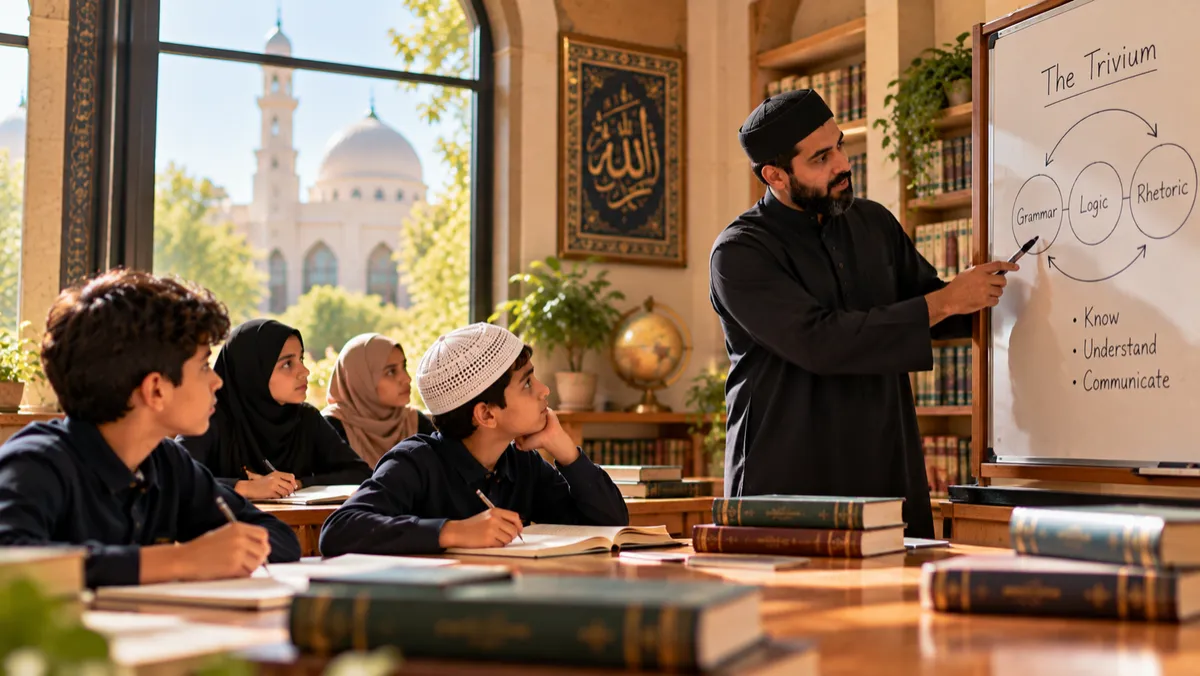
One of its best-known structures is the Trivium, which consists of three stages of learning:
Grammar.
Students build a foundation of knowledge. They learn language, vocabulary, facts, concepts, and the basic building blocks of different subjects.
Logic.
Students begin asking deeper questions. They learn how ideas connect, how arguments work, how to recognize patterns, and how to reason carefully.
Rhetoric.
Students learn to express what they know clearly and persuasively through speaking and writing.
The three stages are connected.
A student first learns the language and information necessary to understand a subject. Then the student learns how to reason about it. Finally, the student learns how to communicate that understanding.
It is education designed to move from knowing, to understanding, to communicating.
Memorization Has a Place
In an age when almost any fact can be found within seconds online, memorization can sometimes seem outdated.
Classical education takes a different view.
Memorization is not intended to replace understanding. It is meant to give students a foundation upon which understanding can grow.
Students can memorize vocabulary, mathematical facts, historical information, grammar rules, poetry, quotations, and other foundational knowledge.
Once that information becomes familiar, students can use it.
Instead of constantly stopping to search for basic information, they can spend more time thinking about what that information means.
The goal is not to turn students into human search engines.
It is to give them a strong intellectual foundation.
From Screens to Discussion
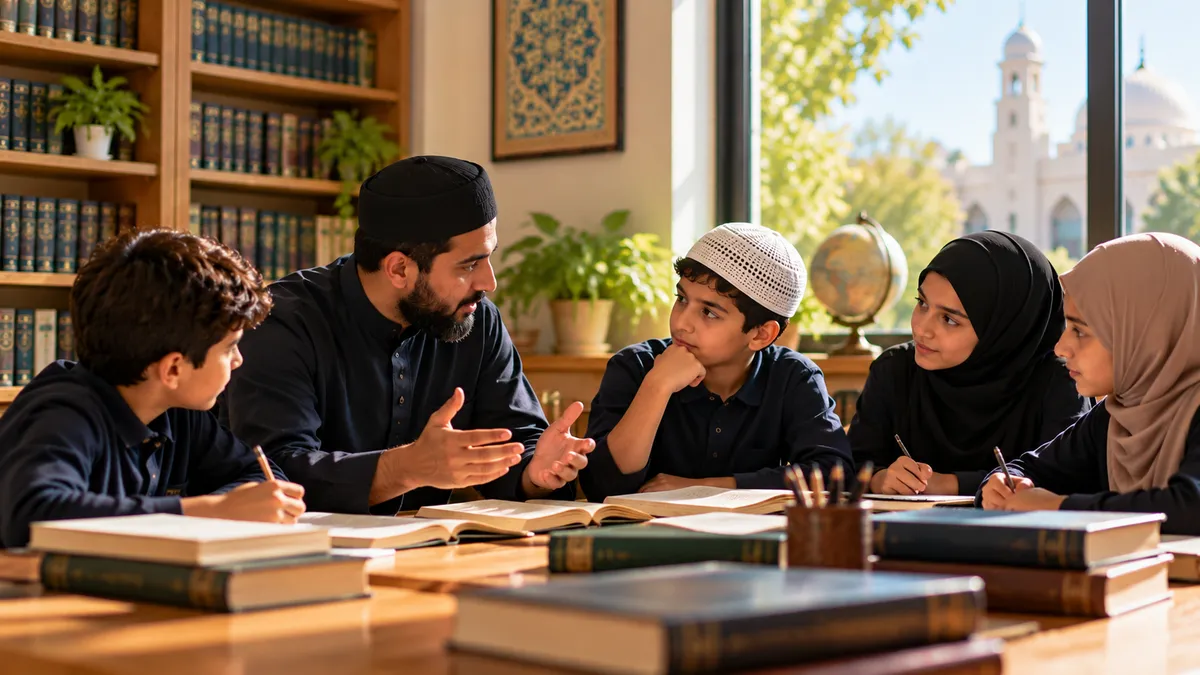
Another characteristic of classical education is the importance of conversation.
A classroom does not have to revolve around a screen.
A teacher can ask a question.
A student can answer.
Another student can disagree.
The teacher can ask why.
The class can examine the evidence, consider another perspective, and work toward a deeper understanding.
Zaytech Academy incorporates Socratic dialogue into its educational philosophy, using questions and discussion to encourage critical thinking and intellectual curiosity.
This creates a different kind of classroom.
Students are not simply receiving information.
They are learning how to think about information.
Why Did Education Move Away From the Classical Model?
Modern education has changed considerably over the last century.
Schools have increasingly incorporated standardized testing, specialized subjects, digital learning platforms, educational software, and technology into the classroom.
Many of these developments have brought real benefits.
Technology can provide access to enormous amounts of information. Digital tools can support teachers and provide students with additional ways to practice and learn.
But the growth of technology has also raised questions about what should remain at the center of education.
When information is everywhere, what should students actually learn?
When technology can provide an answer instantly, how do we teach students to determine whether the answer is correct?
And when students are constantly connected to digital devices, how do we protect time for reading, reflection, conversation, and concentration?
These questions are part of the reason classical education has attracted renewed interest among some families.
Why Some Parents Are Looking Back
For parents considering schools today, academic performance is only one part of the equation.
Many are also thinking about attention, character, communication, independence, and the kind of environment in which their children spend their formative years.
Classical education offers a clear philosophy.
Instead of constantly chasing the newest educational technology, it emphasizes things that have remained important across generations:
Read deeply.
Remember what matters.
Ask questions.
Think carefully.
Write clearly.
Speak confidently.
Learn from great ideas.
Develop good character.
For families who believe education should involve more than preparing students to pass tests, that philosophy can be compelling.
How Zaytech Academy Brings Classical Education to Mountain House
Zaytech Academy combines a classically inspired educational model with an Islamic worldview.
The school describes knowledge as interconnected and as a means of knowing Allah ﷻ. Rather than treating subjects as completely separate areas of information, Zaytech Academy seeks to connect subjects with history, philosophy, faith, and purpose.
This approach can be seen across its curriculum.
Language Arts includes reading, vocabulary, writing, and grammar.
Mathematics uses Singapore Math Dimensions alongside supplemental materials such as Life of Fred.
Science incorporates the Elemental Science Classic Series, along with resources exploring the history and contributions of Muslim civilization.
History connects geography, sociology, Islamic teachings, and the study of civilizations.
Students also study Qur'anic Studies, Aqidah, Fiqh, Seerah, and Akhlaq.
The result is an education where academic subjects and Islamic studies are not treated as unrelated parts of the school day.
They are part of a larger understanding of knowledge.
\
Where Islamic Tradition and Classical Education Meet
There is a natural connection between classical education and important traditions of Islamic learning.
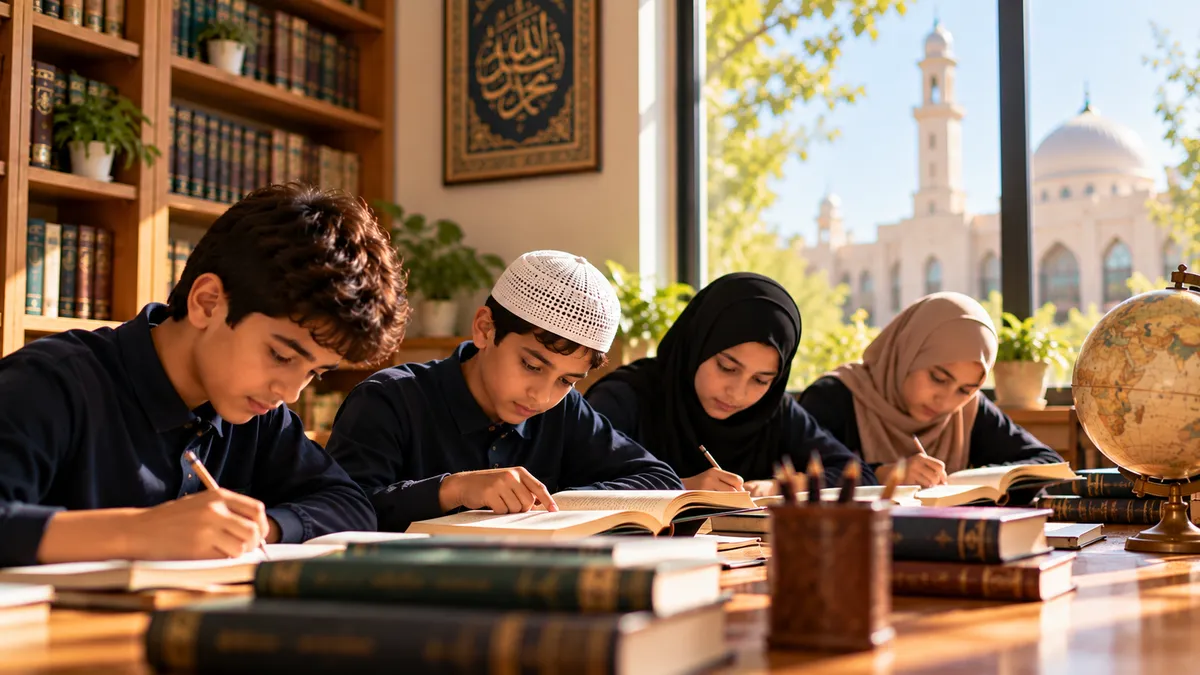
Memorization has long had a significant place in Islamic education, particularly in Qur'anic studies.
Students memorize.
They recite.
They listen to teachers.
They repeat what they have learned.
They seek correction.
And over time, knowledge becomes part of their intellectual foundation.
But memorization is only one part of the process.
Islamic scholarship has also emphasized understanding, reflection, questioning, transmission of knowledge, and the relationship between a student and teacher.
That creates a natural connection with classical education.
Both approaches recognize that education is not simply about collecting information.
It is about forming the person who possesses that knowledge.
The Teacher Still Matters
In an increasingly digital educational environment, the relationship between student and teacher can sometimes become secondary to the technology delivering the lesson.
Classical education places the teacher back at the center.
At Zaytech Academy, pedagogy is understood as more than simply delivering academic content. The school's philosophy emphasizes nurturing the heart and soul alongside the intellect, while encouraging critical thinking, curiosity, collaboration, and moral values.
The school's approach is also influenced by Prophetic pedagogy, emphasizing qualities such as compassion, patience, respect, love, understanding, and accountability.
This makes education personal.
A teacher knows the student.
The teacher can recognize when a student understands something and when they do not.
The teacher can ask a different question.
Give another example.
Challenge an assumption.
Encourage a struggling student.
And celebrate genuine progress.
No algorithm can completely replace that relationship.
Great Books, Great Questions and Great Ideas
Classical education also places importance on engaging with meaningful ideas.
Students are not only asked to memorize information for a test. They are encouraged to encounter literature, history, philosophy, science, mathematics, and religious knowledge as parts of a larger intellectual tradition.
That approach encourages questions such as:
What is truth?
What makes an action good or bad?
Why do civilizations rise and fall?
What can mathematics teach us about order and reason?
How should human beings use knowledge?
What responsibilities come with understanding the world around us?
These questions do not become less important because technology becomes more advanced.
If anything, they become more important.
Education for the Whole Person
Zaytech Academy's vision extends beyond academics.
Its curriculum includes physical education, fine arts, practical arts, logic, handwork, gardening, and other opportunities for students to develop different skills.
Students are encouraged to develop strength, discipline, creativity, responsibility, and resilience.
That reflects a broader idea of education.
A successful student is not simply someone who can score well on an exam.
Education can also mean learning how to work with others, communicate respectfully, care for one's surroundings, solve problems, practice patience, and contribute to a community.
Preparing Students for the Future Without Chasing Every Trend
Classical education is sometimes described as old-fashioned.
But there is an important distinction between being old and being outdated.
A method can be centuries old and still address problems that remain relevant.
Students still need to learn how to read.
They still need to understand mathematics.
They still need to write.
They still need to reason.
They still need to communicate.
They still need to develop character.
And they still need mentors.
Technology will continue to change.
The tools students use five or ten years from now may be completely different from the tools they use today.
But the fundamental skills of thinking, learning, communicating, and living responsibly are unlikely to disappear.
That is where classical education can offer a different perspective.
A Timeless Model for a Modern Community
In Mountain House, Zaytech Academy is bringing these ideas together in a school designed around classical education and an Islamic worldview.
It is not an attempt to recreate the past exactly as it was.
It is an attempt to identify what has lasting value and bring those principles into a modern educational environment.
Books can coexist with technology.
Memorization can coexist with critical thinking.
Faith can coexist with scientific inquiry.
Classical literature can coexist with modern knowledge.
And academic excellence can coexist with character and spiritual development.
The question is not whether education should move backward.
The question is what parts of education are worth carrying forward.
At Zaytech Academy, the answer begins with a simple idea:
Teach children not only what to know, but how to think, how to learn, and how to live with purpose.
That may be an old idea.
But sometimes, old ideas are worth remembering.

At Zaytech Academy, educators strive to create an environment where children can flourish and develop a lifelong love of learning.
© Copyright 2026, All Rights Reserved


