


Learning Like the Past to Lead the Future: Why Parents Are Choosing Low-Tech Classrooms in Mountain House

Learning Like the Past to Lead the Future: Why Parents Are Choosing Low-Tech Classrooms in Mountain House
In a world where children can spend hours surrounded by smartphones, tablets, social media, and constant digital notifications, some families are beginning to ask a different question:
What if children need less technology in the classroom, not more?
In Mountain House, California, Zaytech Academy is building an educational environment around a different idea. Rather than allowing technology to define the learning experience, the school places the emphasis on teachers, books, discussion, hands-on activities, character development, community, and a deep connection between faith and knowledge.
For families looking for an alternative to an increasingly screen-centered childhood, that approach is becoming an important part of the conversation.
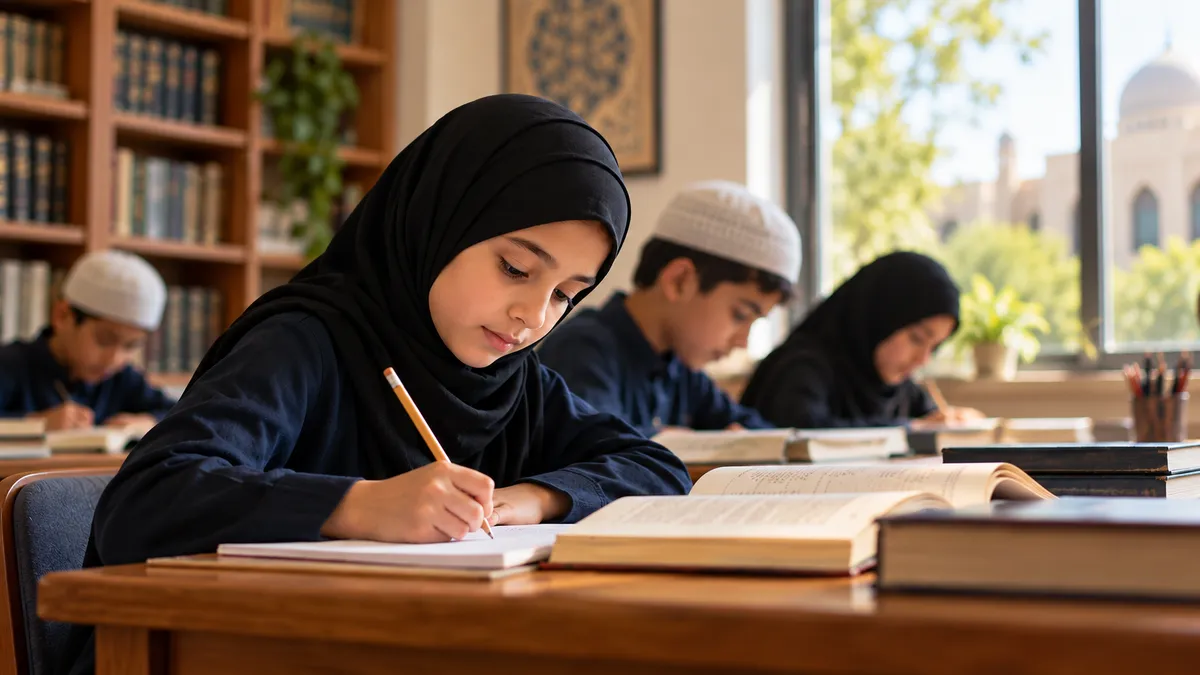
A Different Kind of School Day
Zaytech Academy is a full-time private Islamic school serving students from the early grades through high school. Founded in Mountain House in 2023, the school combines classical educational principles with an Islamic worldview.
The goal is not simply to reduce screen time.
It is to create a different environment for learning.
Students study Qur'an, Islamic Studies, Arabic, language arts, mathematics, science, history, physical education, fine arts, and practical arts. The school day also includes activities such as handwork and gardening.
That combination reflects an educational philosophy in which learning is meant to develop the whole person.
At Zaytech Academy, education is described as a bridge between Deen and Dunya, with academic learning connected to moral character, responsibility, curiosity, and spiritual development.
When the Teacher, Not the Screen, Becomes the Center
One of the defining ideas behind a low-tech classroom is simple: technology should be a tool, not the center of education.
A student can watch an explanation on a screen, but a teacher can ask a follow-up question.
A student can search for an answer online, but a teacher can ask whether the answer actually makes sense.
A digital program can provide information, but a classroom discussion can challenge students to explain, defend, question, and rethink what they believe.
That is particularly important to Zaytech Academy's classical approach.
The school uses the traditional Trivium, emphasizing Grammar, Logic, and Rhetoric. Students are taught not only to acquire information but to understand it, reason through it, and communicate their ideas.
The school also incorporates Socratic dialogue, encouraging teachers to ask thought-provoking questions that develop critical thinking and intellectual curiosity.
In that environment, a quiet classroom is not an empty classroom.
It can be a classroom filled with conversation.
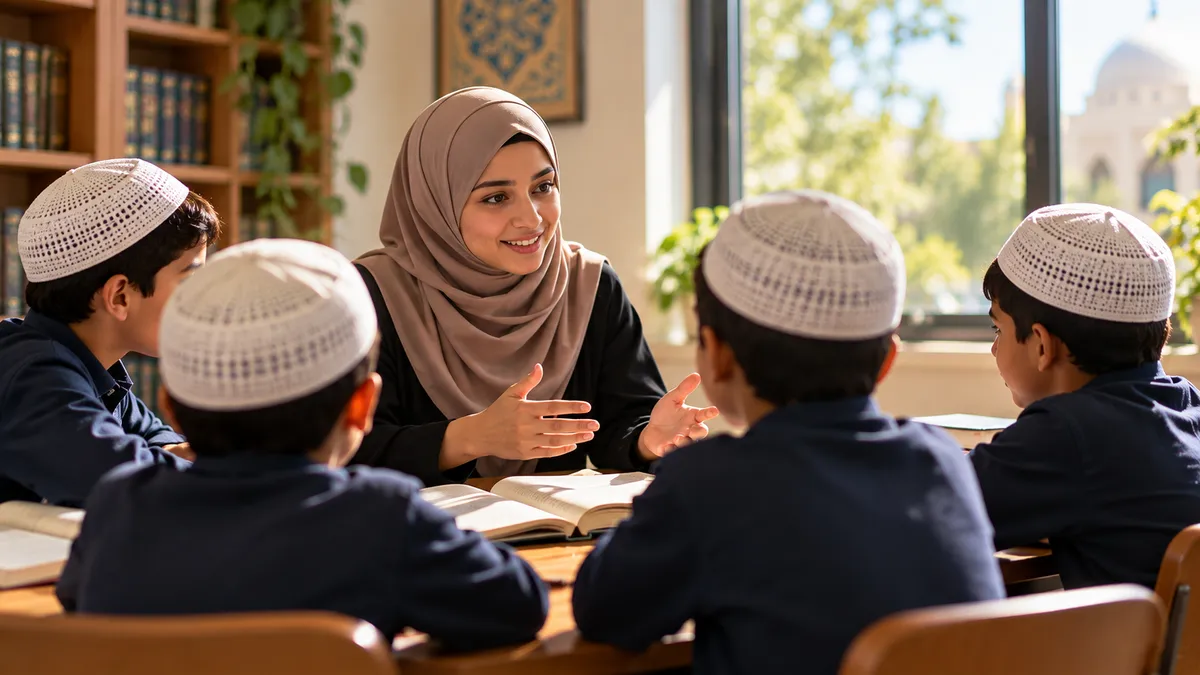
Books, Writing, Discussion and Deep Understanding
The classical model places significant emphasis on mastering foundational subjects.
At Zaytech Academy, students study literature, mathematics, science, history, language, and Islamic studies alongside one another. The curriculum is designed around the idea that knowledge is interconnected rather than divided into completely separate subjects.
Language Arts, for example, is taught through reading, vocabulary, writing, and grammar. The school uses classical and structured resources including the McGuffey Series, Spelling Power, Classical Roots, and the Well-Trained Mind writing and grammar series.
Mathematics follows Singapore Math Dimensions, supplemented by Life of Fred.
Science follows the Elemental Science Classic Series, with additional material including 1001 Inventions: The Enduring Legacy of Muslim Civilization.
The objective is not simply to complete assignments.
It is to build understanding.
Learning With Their Hands
A low-tech philosophy does not mean students simply sit at desks reading books all day.
Zaytech Academy also incorporates practical learning.
The school's program includes fine and practical arts, handwork, gardening, and physical education.
Its broader curriculum includes areas such as cooking, sewing, shop activities, accounting, technology, keyboarding, and other practical arts.
These activities offer students opportunities to make, build, practice, and participate.
There is something fundamentally different about learning how to complete a task with your own hands.
It requires patience.
It requires attention.
And sometimes, it requires making a mistake and trying again.
Those are lessons that do not come from simply consuming information.
A School Built Around Character
For Zaytech Academy, education is not limited to academic performance.
The school identifies moral character, responsibility, intellectual curiosity, spiritual connection, deep understanding, and the integration of Deen and Dunya among the qualities it seeks to develop in its students.
That philosophy extends into the school's graduation requirements.
High school students are expected to complete community service, including dedicated time toward charity and local humanitarian work. Students also complete a senior thesis or capstone project that connects Islamic principles with real-world and academic issues.
The idea is that education should prepare students not only for college or a career, but for responsibility.
The Importance of Community
There is another reason a low-tech environment can feel different: it can create more room for people.
Zaytech Academy describes itself as a community built around meaningful connections, collaboration, spiritual growth, and engagement with local organizations and community members.
The school's community programming includes worship and spiritual practices, events, outreach, and opportunities for families to gather.
The school also emphasizes a nurturing relationship between teachers and students.
Its approach to teaching is inspired by Prophetic pedagogy, with an emphasis on compassion, patience, understanding, love, respect, and accountability.
In an age when so much communication happens through screens, creating a place where children regularly interact face-to-face with teachers and classmates can become an important part of the school experience.
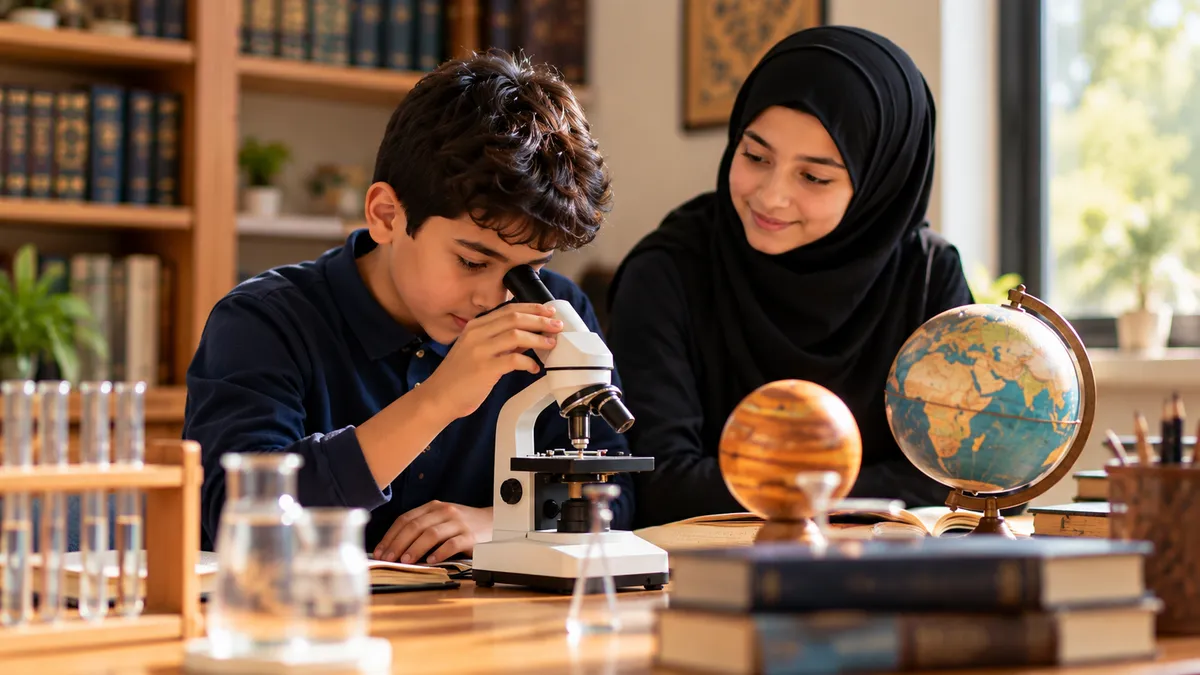
Technology Still Has a Place
Low-tech does not mean anti-technology.
That distinction matters.
Students today will eventually enter universities, workplaces, and industries where technology is unavoidable. Zaytech Academy's curriculum itself includes technology and computer skills among its practical and elective offerings.
The difference is that technology is treated as something students can learn to use intentionally rather than something that must dominate every part of their education.
That can mean learning when technology is useful and when it is better to put it aside.
A computer can be valuable for research.
A book can be better for sustained reading.
A calculator can be useful for certain tasks.
But learning mathematics requires understanding.
The internet can provide information.
But education requires knowing what to do with that information.
Preparing Children for a High-Tech Future by Giving Them Space to Think
It may sound contradictory to prepare children for the future by reducing their exposure to technology.
But the goal is not to prepare students for a world without technology.
It is to prepare them to live in a technological world without becoming completely dependent on it.
That requires skills such as concentration, communication, reasoning, discipline, creativity, curiosity, and self-direction.
These are central to Zaytech Academy's educational philosophy.
The school describes its ideal student as someone who pursues academic excellence while developing responsibility, moral character, intellectual curiosity, spiritual connection, and a commitment to serving the community.
Why Some Families Are Looking for Something Different
For many families, choosing a school is about more than test scores.
It is about asking what kind of person they want their child to become.
Do they want their child to love learning?
To communicate clearly?
To think critically?
To understand their faith?
To develop good character?
To serve their community?
To become comfortable asking difficult questions?
To know how to use technology without being controlled by it?
These questions are at the heart of what Zaytech Academy is trying to build.
The school was founded in 2023 with just five students. Its stated mission has been to create an environment where children can flourish, develop a lifelong love of learning, and grow spiritually and academically while becoming community leaders and ambassadors of knowledge.
Today, the school continues to develop that vision in Mountain House.
Learning Like the Past to Lead the Future
The idea behind a low-tech classroom is ultimately not about rejecting the future.
It is about making sure children have the foundation they need before the future arrives.
Books.
Teachers.
Conversation.
Writing.
Mathematics.
Nature.
Practical skills.
Faith.
Community.
And time to think.
Technology will continue to evolve. The tools available to today's students will look very different from the tools they use as adults.
But the ability to think clearly, communicate thoughtfully, develop good character, seek knowledge, and understand one's responsibilities will remain valuable.
At Zaytech Academy, the goal is to bring those foundations together through a classical education rooted in an Islamic worldview.
Because preparing children for the future may not always mean giving them more technology. Sometimes, it means giving them the space to learn how to think before they reach for a screen.

At Zaytech Academy, educators strive to create an environment where children can flourish and develop a lifelong love of learning.
© Copyright 2026, All Rights Reserved


